
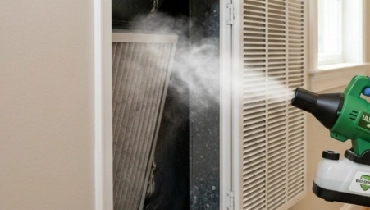
Antimicrobial Treatment After Air Duct Cleaning
Antimicrobial spray is sometimes used as an additional treatment after air duct cleaning. Depending on the product, it may help control certain microorganisms on approved surfaces or address specific odors associated with HVAC systems. However, it does not replace the physical removal of dust, dirt, pet dander, and other accumulated debris.
Understanding how HVAC antimicrobial spray works, which surfaces can be treated, and what precautions apply can help homeowners determine whether this treatment is appropriate for their duct system.
Aire Serv of Coastal Carolina currently offers 10% off duct cleaning plus a free antimicrobial spray as part of our pet-focused duct-cleaning promotion.
What Is Antimicrobial Spray for Air Ducts?
Antimicrobial spray is a chemical treatment designed to control certain microorganisms, such as bacteria and fungi, on approved surfaces. In HVAC systems, some products are also used to address specific odors or help control microbial growth on designated components..
An HVAC antimicrobial spray is not a replacement for cleaning. It does not remove accumulated dust, dirt, or pet dander, and its effectiveness depends on the product's formulation, intended use, and application instructions.
Not all antimicrobial products are approved for use inside air ducts. Some are intended for specific HVAC components or hard surfaces, so the product label should always be checked to determine where it can be applied and what precautions are necessary.
Homeowners may encounter terms such as air duct sanitizer, duct sanitizer, or HVAC disinfectant spray when researching treatment options. However, these terms are not interchangeable. The product label determines whether a treatment is intended for deodorizing, microbial control, sanitizing, or disinfection on a particular surface.
Antimicrobial Products Used for HVAC Systems
Different antimicrobial products have different purposes, application requirements, and precautions. Two products used by Aire Serv of Coastal Carolina are Nu-Calgon Bio-Fresh cd and Sporicidin Disinfectant Solution.
Nu-Calgon Bio-Fresh cd
Nu-Calgon Bio-Fresh cd (EPA Reg. No. 9804-3-65516) is a bacteriostat, fungistat, and deodorizer. Its label distinguishes ductwork deodorizing from microbial control on evaporator coils, drip pans, and associated air-conditioning parts. Those components must be pre-cleaned before treatment.
Bio-Fresh cd addresses specified odors associated with bacteria, mold, mildew, smoke, and animals. It contains no perfumes or masking agents, but its safety data sheet lists a slight chlorine odor.
Sporicidin
Contec’s Sporicidin Disinfectant Solution (EPA Reg. No. 8383-3) has approved disinfecting, deodorizing, and mold-control uses on specified surfaces. Its label lists hard-surface exteriors of air ducts. Application must follow the directions for the particular surface and use.
Sporicidin has a hospital-like scent. Its label requires checking fragrance acceptability with occupants before treatment, so discuss scent sensitivities with your service professional in advance.
Air Duct Cleaning vs. Antimicrobial Treatment
Air duct cleaning and antimicrobial treatment perform different jobs:
- Air duct cleaning: Professional equipment is used to loosen and collect accumulated material from accessible ductwork and other applicable HVAC components.
- Antimicrobial treatment: An additional treatment that may be applied to appropriate surfaces after cleaning, according to the manufacturer's directions for the specific product being used.
For homeowners with pets, regular household activity can introduce hair, dander, dust, and other particles into the home. If you're concerned about what may be accumulating in your HVAC system, Aire Serv of Coastal Carolina can inspect your system and discuss appropriate duct-cleaning and indoor air quality options, including HVAC antimicrobial treatment.
What to Know Before Antimicrobial Treatment
Antimicrobial products have different safety precautions depending on their intended use and application.
Before treatment, homeowners should understand the following:
- Bio-Fresh cd precautions: Its label cautions that it may be harmful if swallowed and may cause eye irritation. Directions for treated HVAC components call for surfaces to air-dry.
- Aquariums, exotic fish, and plants: Tell your service professional if these are nearby. Nu-Calgon's Bio-Fresh cd guidance states that the product should not come into contact with exotic fish or plants.
- Sporicidin precautions: Its building-material mold-control directions require occupants, including pets, to leave the containment area before treatment. Children and pets must stay off treated areas until the spray has dried. These requirements apply to that specified use.
- Fragrance sensitivities: Discuss scent concerns and ask about any applicable ventilation requirements.
Before application, ask your service professional which product will be used, which surfaces will
be treated, and what drying, ventilation, and return-to-area instructions apply.
Schedule Duct Cleaning With Aire Serv of Coastal Carolina
If you're concerned about dust, debris, or pet-related buildup in your duct system, Aire Serv of Coastal Carolina can help.
Our service professionals can evaluate your ductwork and explain the recommended service. We provide air duct cleaning and indoor air quality services for homeowners throughout Wilmington, Jacksonville, Hampstead, Holly Ridge, Sneads Ferry, and surrounding Coastal Carolina communities.
Schedule your air duct cleaning service with Aire Serv of Coastal Carolina today or contact our team to discuss your options.